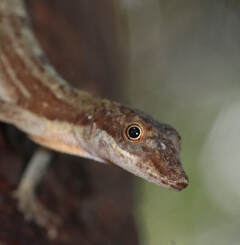
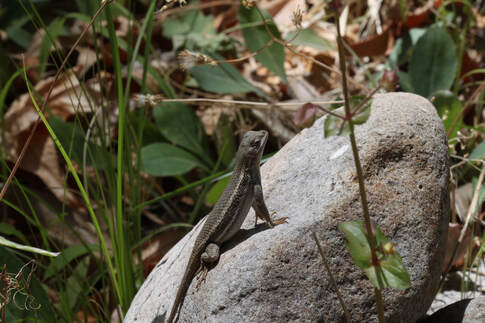
Our new paper on ecological overlap in both urbanized and natural habitats for brown and bark anoles was just published in the Journal of Thermal Biology! Thhis paper was the result of a class project for the Herpetology class that I teach here at FIU. Congrats to first author Noah Gripshover, and check out the link to read the paper.
|
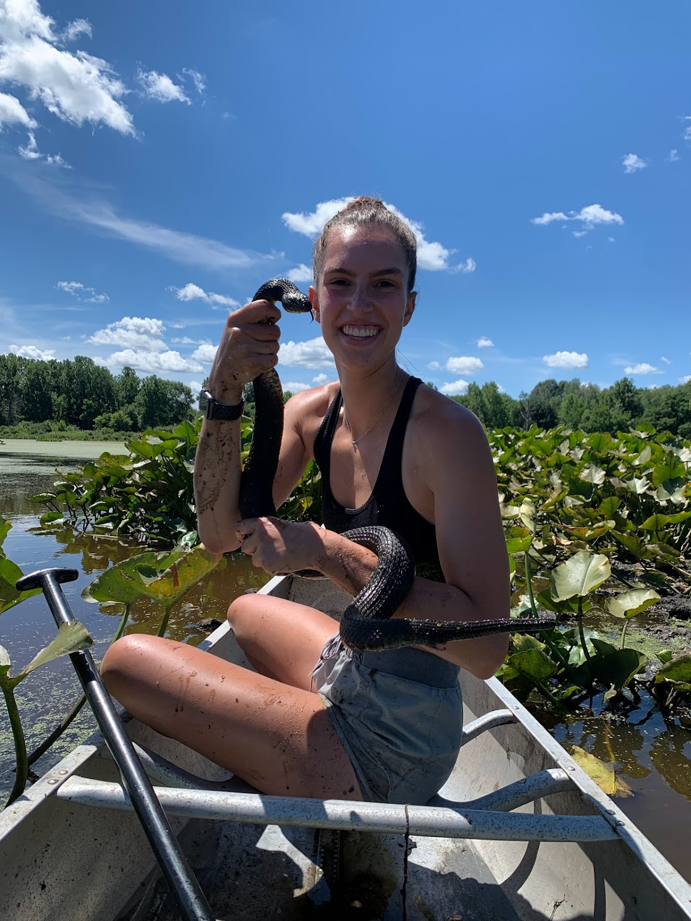
Our new paper on plasticity of upper thermal tolerance in ring-necked snakes was just published in the Journal of Thermal Biology! We found that ring-necked snakes increased their voluntary thermal maximum (a measure of upper thermal tolerance) after a short period of time (3 h) at warm temperatures. We also found that the pattern of plasticity varied based upon whether temperature is measured in the mouth or cloaca (this species has regional heterothermy, where the head is normally warmer than the cloaca). These findings help us think about how regional heterothermy might interact with tolerance plasticity in temperate organisms in the context of rapid environmental change. Check out the link to read more.
Our new paper on networks of heat-shock proteins in the tropical slender anole (Anolis apletophallus) was just published in Integrative and Comparative Biology! We found that while exposure to warm temperatures induced an increase in expression of many of the components of heat shock protein networks, increasing magnitude of the heat exposure did not increase the transcriptomic response of heat shock protein networks. Our findings have implications for understanding the potential limits of plasticity of thermal tolerance. Congratulations to first author Kelly Wuthrich publishing this research! Check out the link to read the paper.
Our new paper on parasite load and heat tolerance in slender anoles was just published in the Journal of Experimental Biology! We experimentally reduced parasites using antiparasitic drugs and found that reducing parasites was associated with an increased in voluntary thermal maximum, a measure of heat tolerance. This work is one of the dissertation chapters of first author Leah Bakewell. Congratulations Leah! Check out the link to read the paper.
Our new paper on the genetic basis for a well-known dewlap polymorphism in the Panamanian slender anole was just published in Heredity! We identify the dominance structure of the morphs and using a PoolSeq approach, identify some candidate genes for the control of this trait. Stay tuned for more papers on dewlaps in this species, and check out the link to read the paper.
Our new review paper on decoy coloration, coauthored with long-time collaborator Charles M. Watson, was just published in the Journal of Experimental Biology! In this paper, we cover what is known about decoy coloration in lizards, how it compares to what is known about the biology of other decoys, and identify areas for future research. We hope this paper inspires some other folks to study this cool and integrative type of antipredator coloration. Check out the link to read the paper.
Our new paper on the impact of testosterone on gene expression in the lizard genus Sceloporus was just published in the American Naturalist! We found that genes were more responsive to manipulated testosterone in males than females, but that the impact of testosterone was congruent between the sexes. These results have implications for our understanding of how the relationship between hormones and gene expression can evolve to produce diversity of sex-specific phenotypes. Congratulations to first author Chris Robinson, and check out the link to read the paper.
Our new paper on the temperature dependence of regional heterothermy in ringnecked snakes was just published in the Journal of Experimental Biology! We found evidence that cloacal and head temperatures are differentially regulated, which is surprising for such a small snake. This manuscript was the result of a class research project for the Field Herpetology course at Mountain Lake Biological Station in 2023, with all of the students as coauthors. Check out the link to read the paper, and also a popular summary for the Inside JEB feature.
Our new paper on the feeding behavior of ground snakes (Sonora) was just published in the Journal of Zoology! We found that ground snakes use different types of feeding behavior depending on the prey type (scorpion, centipede, or spider). Congratulations to first author Noah Gripshover (this is the first chapter of his dissertation)! Check out the link to read the paper.
PhD student Emma Schmitz joined the lab from the University of Nevada Reno, where she graduated with BS in 2024. While at UNR, Emma worked on a variety of projects ranging from ecology of desert lizards to neurobiology. Welcome to the lab, Emma!
|